Setting young people up to live their best lives
CEO’s Report
Kootuitui ki Papakura exists to address the inequities in our community and improve the lifelong outcomes of young people growing up in South Auckland.
Soon after I arrived at Kootuitui, several events occurred that, upon reflection on the mission statement above, made its achievement seem insurmountable — unattainable.
How do you effectively combat the systemic implications of poverty at a community level? At the time, and occasionally still now, I am struck by the seemingly impossible magnitude of the task at hand: creating sustainable change at scale. The answer lies in a critical juxtaposition of community-designed and delivered solutions, coupled with the ability to understand, articulate and address the root causes through structural transformation.
The Need is Real
Increasingly, it has become apparent to many of us who work in this field that short-term relief options, such as food parcels, may provide temporary assistance today and tomorrow, but do not address the fundamental problem we face within our community – poverty. The only long-term solution is systemic change. Furthermore, genuine transformation will only occur when the underlying structures, power dynamics, mindsets, and public policies are fundamentally turned on their head. Things need to be done differently. Kootuitui and charities like ours should be working themselves out of a job – except the opposite is true. The need is real; it continues to grow. The cost of inequity in childhood is immeasurably high, and the impact on that young person’s future is all too often devastating.
Kootuitui recognises that the issues our community faces are complex and interconnected; strategically, we work at multiple levels, positioning ourselves as a small but mighty change maker. Kootuitui is a founding member of the Thriving Aotearoa Board, intentionally participating in transforming systems and policies to achieve enduring change. Kootuitui will only partner with a utility provider on the basis that we are afforded the agency to recommend, provide economic relief, hold funding for, and repay utility-related debt. We collaborate with utility providers, including Mercury, Nau Mai Ra, Contact, and Veolia, to offer pre-disconnection intervention, financial relief, advocacy, education, and support. These utility companies are at the frontier, crossing their corporate boundaries to partner with charities like Kootuitui, innovating collectively for the betterment of the community.
From Strength to Strength
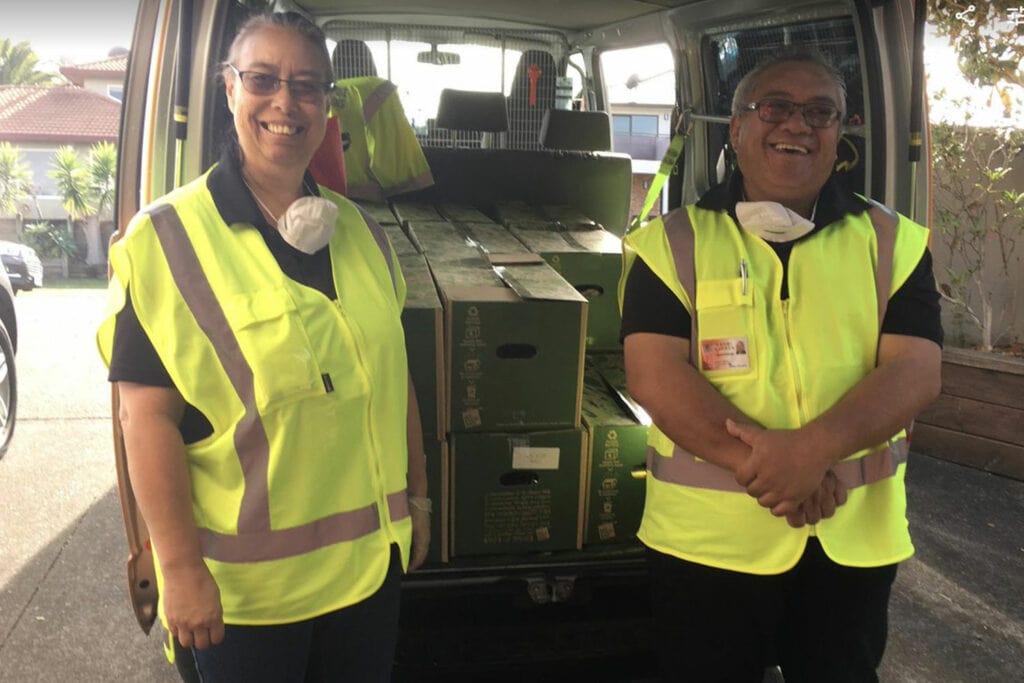
As you will see in the ensuing report, we have had a busy year. We have grown and diversified our services, including our first full year delivering financial wellbeing support from our Broadway Office. Our Warm Dry Healthy Homes team has gone from strength to strength – more recently adding energy education and intervention to their portfolio.
We have continued our business as usual work in education and health, with the addition of our Kohine mentoring programme.
In closing, I’m incredibly proud to be a part of the Kootuitui team. The brand Kootuitui is trusted and respected within our community. Our staff and volunteers live in and reflect the community they serve. Our team operate a non-judgemental, no-barrier, peer-to-peer approach designed to put whaanau at ease.

I would like to take this opportunity to thank every member of the Kootuitui whaanau for your hard work, passion, and commitment throughout the year. Thank you, too, to the Board of Trustees who go above and beyond to support Kootuitui and our community.
“Mā mua ka kite a muri, ka muri ka ora a mua”
“Walking backwards into the future”
This whakatauki suggests that the past is clearly visible, but the future is uncertain. It encourages looking to the past to gain wisdom for navigating future challenges and making change.
Abi Bond
CEO
The Impact of The Pandemic

Our Whaanau
- The average daily indoor temperature in the winter for most New Zealand houses is just 16°C. If house temperatures fall below 16°C, the risk of respiratory illness increases.
- Children growing up in Papakura are three times more likely to live in cold damp mouldy living conditions.
- Papakura residents are 33% less likely to own their own homes and twice as likely to live in overcrowded conditions.

Our Health
- Papakura East is in the highest 1% of Census areas for childhood hospitalisations potentially attributable to
housing. - Inequitable access to primary care – 46% of school-age children haven’t visited their GP in the last year.
- Pacifika children are 75 times more likely to contract rheumatic fever – a disease that has been successfully eliminated in most first-world countries.

Our Education
- Students in South Auckland are twice as likely to leave school without any qualifications compared to the Auckland/New Zealand average.
- In the Auckland region, approximately 7% of school leavers graduate with less
than their NCEA level 1; however, in South Auckland, the figure is 17.6%. - After the 2021 lockdown in NCEA, achievement rates for high decile schools remained static or improved conversely, achievement rates in Papakura declined
significantly.
"He whakatauki Ehara taku toa i te toa takitahi, ēngari taku toa he toa takatini"
"Success is not the work of one but the work of many"
Our Supporters
We benefit from the support of funders, partners and community organisations, and the commitment of the schools’ boards, leaders, teachers and staff.